
百度网盘
80 percent of flights in Shanghai canceled, over 100 streets see waterlogging as Typhoon Dolphin sets record to travel 6,000km before landfall_我的网站

一 | 2024年上半年,樟宜机场共接待了3,301万名乘客,较2019年上半年的3,323万人次仅略有下降,恢复率达到99.3%。

二 | 尽管整体客运量恢复良好,但游客人数的恢复率仅为92.6%,1月至6月期间抵达樟宜机场的旅客人数为664万人次,低于2019年同期的717万人次。

三 |
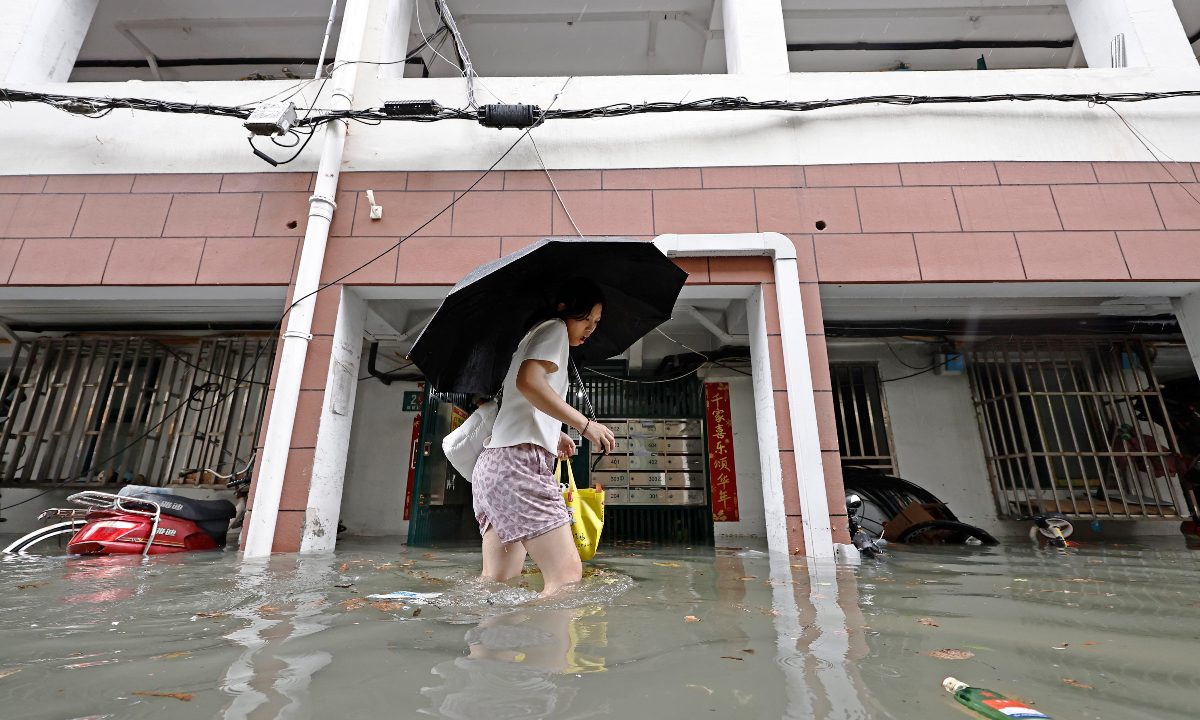
As Typhoon Dolphin continues to batter eastern China from Sunday afternoon after making landfall, a new typhoon system, Peilou, the 16th typhoon of the year, formed in the western North Pacific on, creating a rare situation with three typhoons Dolphin, Chan-hom and Peilou active simultaneously.
The National Meteorological Center (NMC) issued its second typhoon red alert of the year on Sunday morning, weather.com.cn reported.
Under the influence of Typhoon Dolphin, Shanghai experienced significant winds and rainfall. As of 5 pm on Sunday, a total of 215,600 people had been relocated from high-risk areas across Shanghai, China Radio International (CRI) reported on Monday.
Shanghai put in place preparatory measures in response to strong winds and heavy rainfall created by Typhoon Dolphin. As of 5 pm on Sunday, waterlogging had been cleared at 155 of the city’s 181 reported waterlogged sites, with response teams from different departments working to address the remaining 26, according to CRI.
Meanwhile, air traffic across East China was seriously influenced by the weather system, with widespread flight cancellations at multiple airports.
More than 80 percent of flights at Shanghai’s Pudong and Hongqiao airports were canceled as of 6 pm on Sunday. Of Shanghai Pudong International Airport’s 889 scheduled arrivals, 760 were canceled, while 729 of 897 departures were grounded. At Shanghai’s Hongqiao International Airport, almost all 431 scheduled arrivals were canceled, while 342 of 431 departing flights were unable to depart.
Typhoon-related flight restrictions also impacted Southwest China’s Sichuan and Chongqing, prompting widespread cancellations of flights to and from the Yangtze River Delta.
A typhoon track and airport impact forecast map from aviation information platform Variflight.com revealed that as many as 44 airports were likley to be affected by Typhoon Dolphin between August 9 to 12.
According to China Meteorological Administration, Typhoon Dolphin has three notable characteristics.
First, it traveled a long distance across the open ocean, showing an unusually long lifespan. The typhoon formed near the International Date Line, and its track length before landfall exceeds 6,000 kilometers. Its period of activity is expected to exceed 15 days – three times that of a typical typhoon. It become the first typhoon on record to form near the International Date Line and made landfall in China with at least tropical-storm strength, Beijing News reported on Sunday.
Second, it underwent explosive intensification and remained at high intensity for an extended period. Within 48 hours of its formation, the typhoon rapidly strengthened into a super typhoon, reaching a peak intensity of 65 meters per second, making it the second-strongest typhoon of the year so far. It maintained super typhoon strength for as long as 5.5 days and has remained at typhoon strength or above for nine days, according to weather.com.cn.
Third, Typhoon Dolphin has an exceptionally large circulation, with a 7-level wind radius of 420 to 450 kilometers and a circulation diameter of about 1,300 kilometers. It is expected to bring more than three days of strong winds to the East China Sea and torrential rain across much of East China, with local rainfall exceeding 600 millimeters at some places. Authorities urge the public to guard against flash floods and geological hazards and avoid coastal, mountainous and river-valley areas, weather.com.cn.
Typhoon Peilou formed at a tropical storm level. At 2 pm, the typhoon’s center was located over the western North Pacific, about 740 kilometers north-northwest of Saipan, Guam, packing winds of up to 65 kilometers per hour near its center, China Central Television (CCTV) reported on Sunday.
The name “Peilou” comes from China’s Macao, referencing a common migratory bird found in the region.
Typhoon Peilou is forecast to move rapidly eastward at a speed of 25 to 30 kilometers per hour, with its intensity gradually strengthening. It is expected to have no impact on China in the coming days, CCTV reported.
According to Zhou Guanbo, the chief weather forecaster at the National Meteorological Center (NMC), July to September is the peak season for typhoon formation, with August seeing the most storms form and make landfall in China.
Zhou said that typhoon activity reaches its peak in August, when the number of storms forming and making landfall in China is the highest of the year. Therefore, having three typhoons or two typhoons active at the same time is not unusual, Beijing News reported on Sunday.
According to Zhou, the Pacific entered an El Nino state in May 2026, with sea surface temperatures in the central and eastern equatorial Pacific continuing to rise. Compared with last year’s La Nina year, typhoons this year are expected to form farther east, allowing them to gain more energy and moisture over the open ocean.
This year, the number of typhoons that have formed and made landfall in July was higher than usual. Five typhoons formed over the western North Pacific and the South China Sea in July, three of which made landfall in China, Beijing News reported, citing the China Meteorological Administration.
In August, six to seven storms are forecast to form – above the long-term average of 5.6 – with two to three expected to make landfall in or significantly affect China, near the average of 2.3.
In August, one to two strong typhoons are expected to move northward into northern and northeastern China. Experts noted that even as the main body of these northward-moving typhoons weaken, their outer circulation and interaction with cold and warm air could trigger widespread extreme rainfall, which need heightened precautions, according to Beijing News.
Global Times
。特别是6月份,樟宜机场的游客人数恢复率仅为85.3%,这反映出新加坡旅游业面临的挑战。

四 | 新加坡旅游业复苏后劲欠缺 泰勒·斯威夫特在3月份的演唱会为新加坡的旅游业带来了短暂的提振,樟宜机场的游客人数几乎与2019年3月持平,恢复率达到99.9%。然而,演唱会结束后,旅游业的恢复率从第一季度的96.7%下降至第二季度的88.5%。这表明,尽管大型活动能够短期内提升旅游业,但长期来看,新加坡需要更多创新和策略来吸引游客。大多数传统客源市场现在都在苦苦挣扎,短期前景并不乐观。自今年年初新加坡免除对中国公民的签证要求以来,中国引起了广泛关注,两国之间的客运量恢复到新冠疫情前的水平。然而,樟宜机场的中国入境游客人数仍远低于2019年的水平,2024年第二季度下降了10%。

五 | 新加坡-中国客运量的复苏是由出境(包括在新加坡工作的中国公民)和过境段推动的。樟宜机场的客运恢复率也从第一季度的100.5%小幅下降至第二季度的98.2%。

六 | 然而,樟宜机场能够以更强劲的出境需求抵消大部分入境需求的下降。2024年上半年,樟宜机场的公交交通量增长了约6%,其中过境运输量占总运输量的34%,高于2019年的32%,这表明樟宜机场正在越来越多地依赖过境乘客,而不是直接入境的游客。

七 | 当局应平衡高消费与经济型旅游 为了吸引更多的游客,新加坡需要考虑采取一些措施,例如提供更多的经济住宿选择和降低区域航班的出发费。此外,新加坡还应该考虑影响对价格敏感的旅行者的其他因素,例如提高旅游产品的性价比和改善旅游体验。新加坡的酒店房价也在不断上涨,2024年上半年,酒店平均房价为每晚280新元,比2019年同期增长了32%。

八 | 与此同时,酒店入住率下降,从2019年上半年的约85%降至2024年上半年的80%,这使得新加坡面临着难以吸引价格敏感的旅行者的风险。亚洲地区的旅客需求也受到了樟宜机场起飞费用上涨的影响,目前该费用总计为65.20新元。尽管这一费用与酒店房间的价格相比可能看起来并不多,但对于许多仅在新加坡停留一两个晚上的地区旅客来说,65.20新元往往比廉价航空公司提供的基本机票还要昂贵。此现象在过去一年中导致亚洲航空公司减少了来往樟宜机场的六条航线,这反映出在刺激其他东南亚国家的入境需求方面所面临的挑战。新加坡旅游局已经宣布了一系列大型投资,以帮助旅游业应对日益激烈的全球竞争。例如,计划到2027年在樟宜机场附近建立自己的保时捷体验中心,并建设一个占地4公顷的海滨健康飞地。这些新景点可能会成功地吸引更多的高端游客,并进一步将新加坡与更便宜的目的地区分开来。新加坡还需要吸引预算有限的或中端游客,以产生支持旅游业整体生态系统所需的数量,并帮助填补5号航站楼开放后将出现的更大的樟宜机场。新加坡在制定其2040年的长期旅游愿景时,应当考虑采取一系列措施来吸引对价格敏感的旅行者。这包括提供更多的经济型住宿选择,以及降低区域航班的起飞费用,以减轻旅客的财务负担,并促进旅游业的发展。通过这些举措,新加坡不仅能够吸引更多的预算有限的旅客,还能够提升其作为旅游目的地的吸引力,从而实现旅游业的长远发展。
Current article:http://d6xn.gamajionghuanmuniuzhuanguchu.cyou/list_hw7u/kc98a.html
Published on:21:27:32